Old Growth on a New Moon
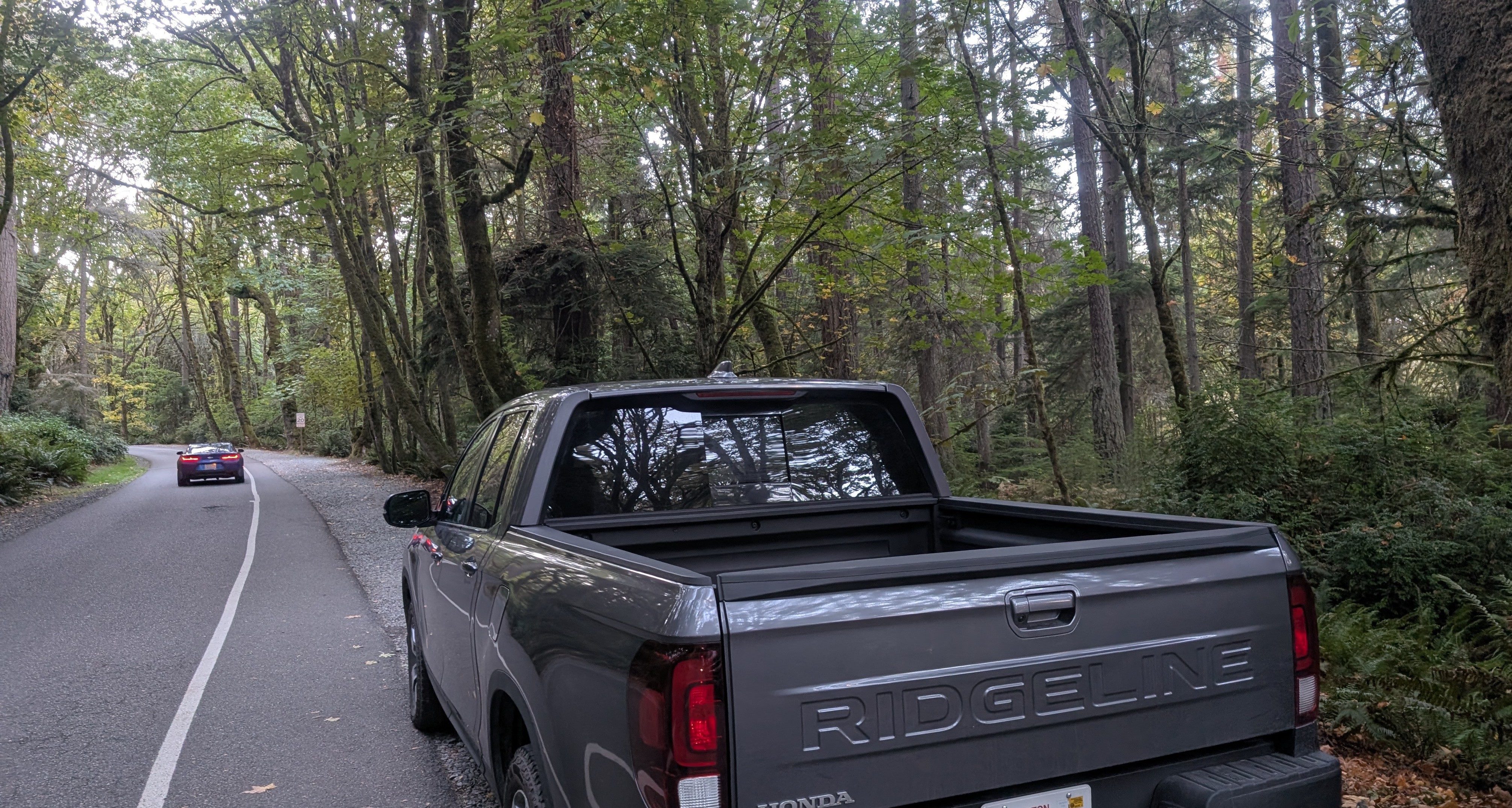
Lacing Up: Transitioning Into the Canopy
Crossing into the Point Defiance peninsula, the hum of urban life softens. Ahead lies a rare maritime old-growth forest, preserved upon a dramatic finger of land jutting straight into the surrounding vista. Under the quiet influence of the New Moon, the forest air was crisp and grounding—an invitation to slow my cadence and step into presence.
Forest View From the Trail
Point Defiance Old-Growth Loop
Wandering beneath towering boughs, lush sword ferns, and carpeted moss along the winding elevation. There is a gentle rustle of the canopy and the peaceful silence of the forest floor.
✦ Cool Facts About Old-Growth Rainforest Canopies:
- Canopy Microclimates: Old-growth canopies generate their own distinct humidity and temperature pockets, buffering the forest floor against summer heatwaves and winter freezes.
- Aerosol Phytoncides: Conifers release aromatic organic compounds called phytoncides (such as alpha-pinene and limonene). Breathing these forest aerosols has been clinically shown to reduce cortisol (stress hormone) and boost human immune killer cells.
🌲 The čəbidac & The Ancient Sentinels
Honoring Salish and Puyallup lineage and 500-year-old living elders
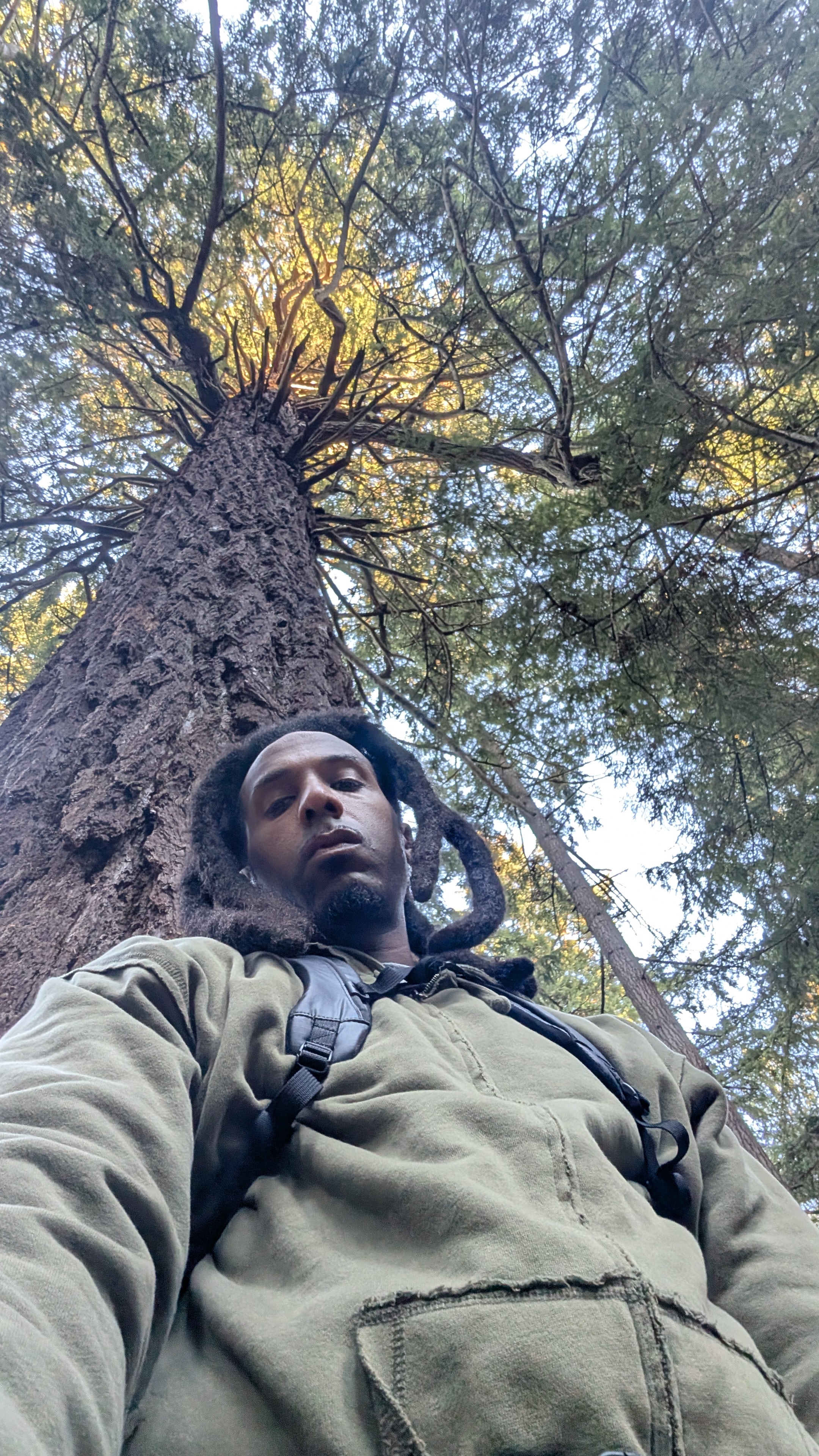
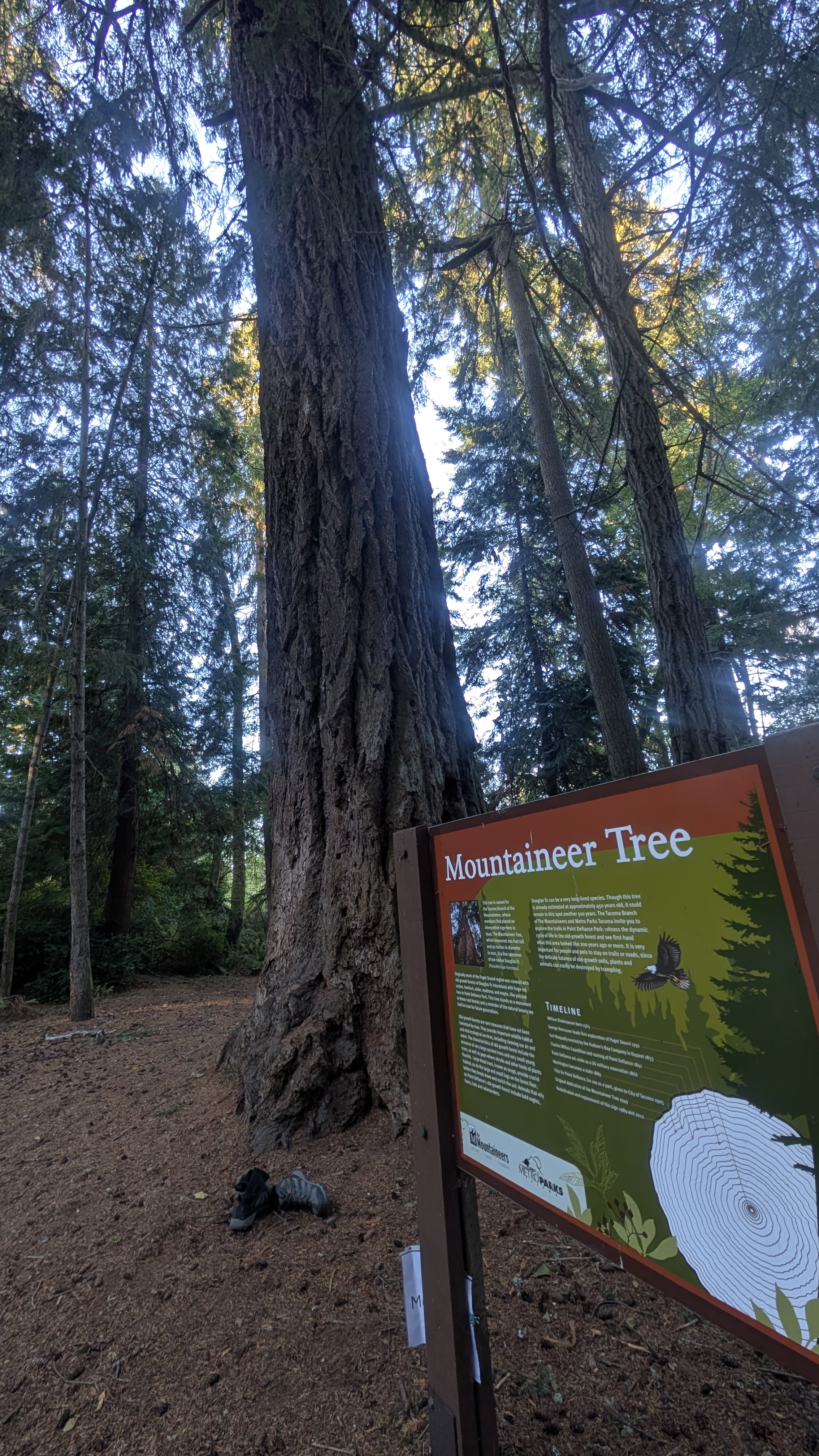
The Mountaineer Tree
Towering over Five Mile Drive, the Mountaineer Tree is one of the grandest survivors of the pre-colonial Puget Sound. Estimated at 450 to 500+ years old: when this elder took its first breath as a seedling, half a world away the Songhai Empire flourished at its zenith. Its grand institutions at Timbuktu were at their golden peak—anchored by the storied University of Sankoré and hosting scholars renowned across continents for their mastery in astronomy, mathematics, medicine, optics, and philosophy beneath the desert stars.
- The Mouse Tail Legend: In Coast Salish tradition, during an ancient wildfire, tiny mice sought safety inside the cones of the Douglas-fir. The three-pronged bracts protruding from each cone scale are the mice's back legs and tail!
- Natural Fire Armor: Mature Douglas-firs produce thick, deeply furrowed cork-like bark up to 10–12 inches thick, shielding the living vascular cambium from natural forest fires.
- "False Hemlock": Its scientific genus name Pseudotsuga combines Greek pseudo (false) and Japanese tsuga (hemlock), signifying that it is not a true fir (genus Abies).
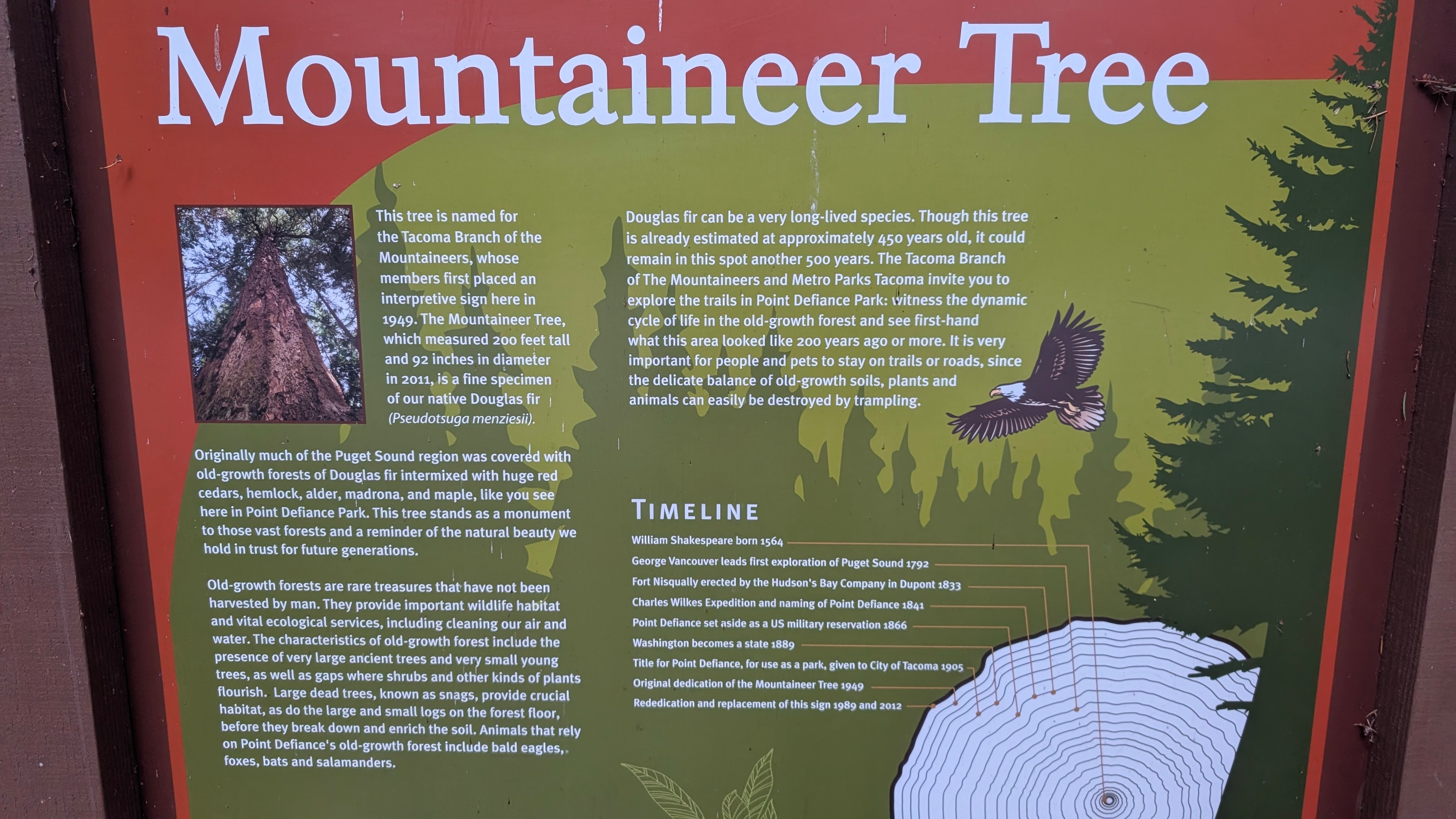
Canopy Ascension
Pseudotsuga menziesii
Looking directly up through the crown. At 200+ feet high, the branches form a high-altitude ecosystem, gathering moisture directly from the marine fog banks rolling off Puget Sound.
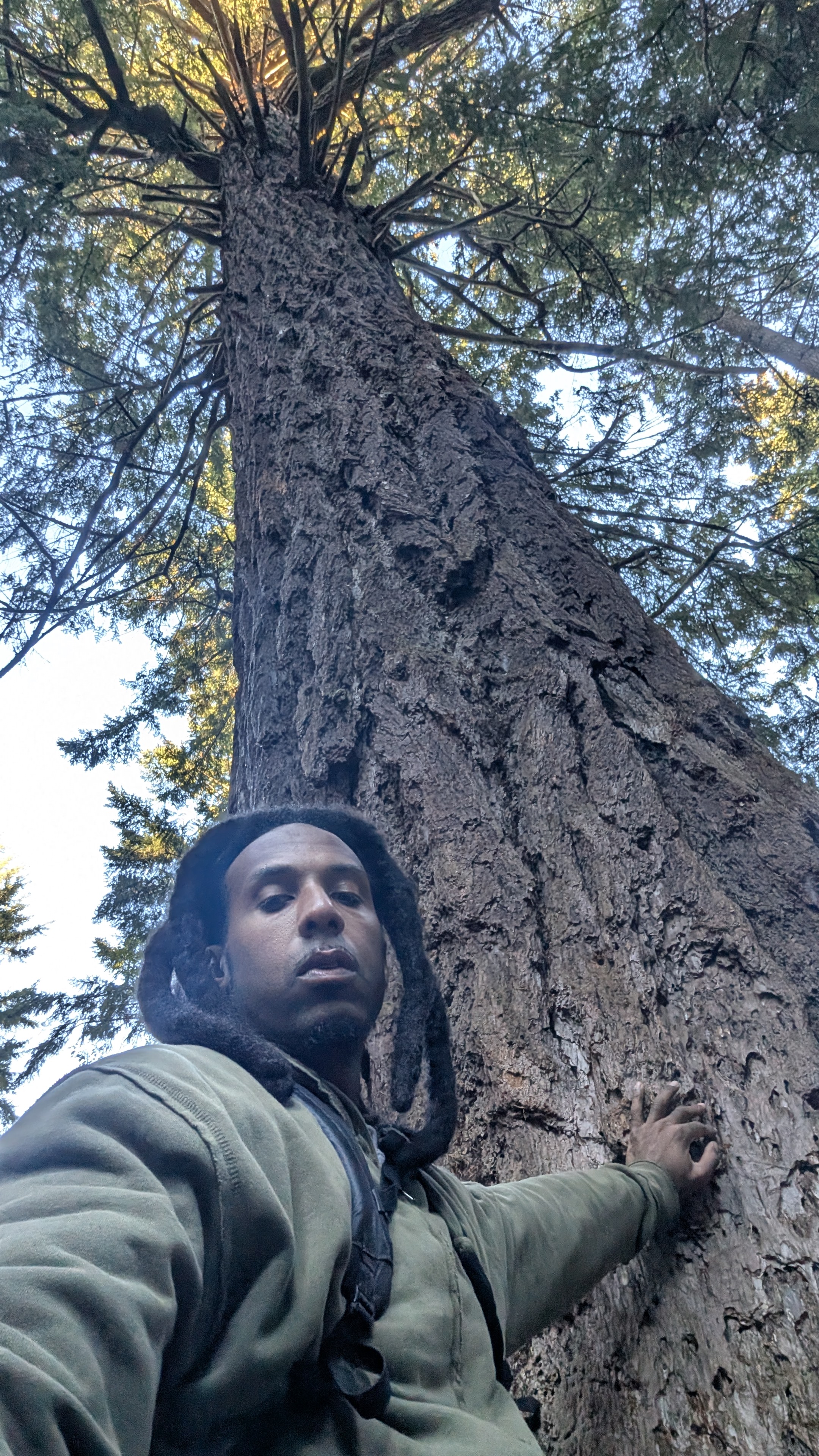
Tactile Grounding
Somatic Forest Attunement
Placing a palm flat against centuries-old bark anchors my physiology. In nature alignment, physical touch bridges my modern sensory overload with the slow, resonant frequency of ancient wood.
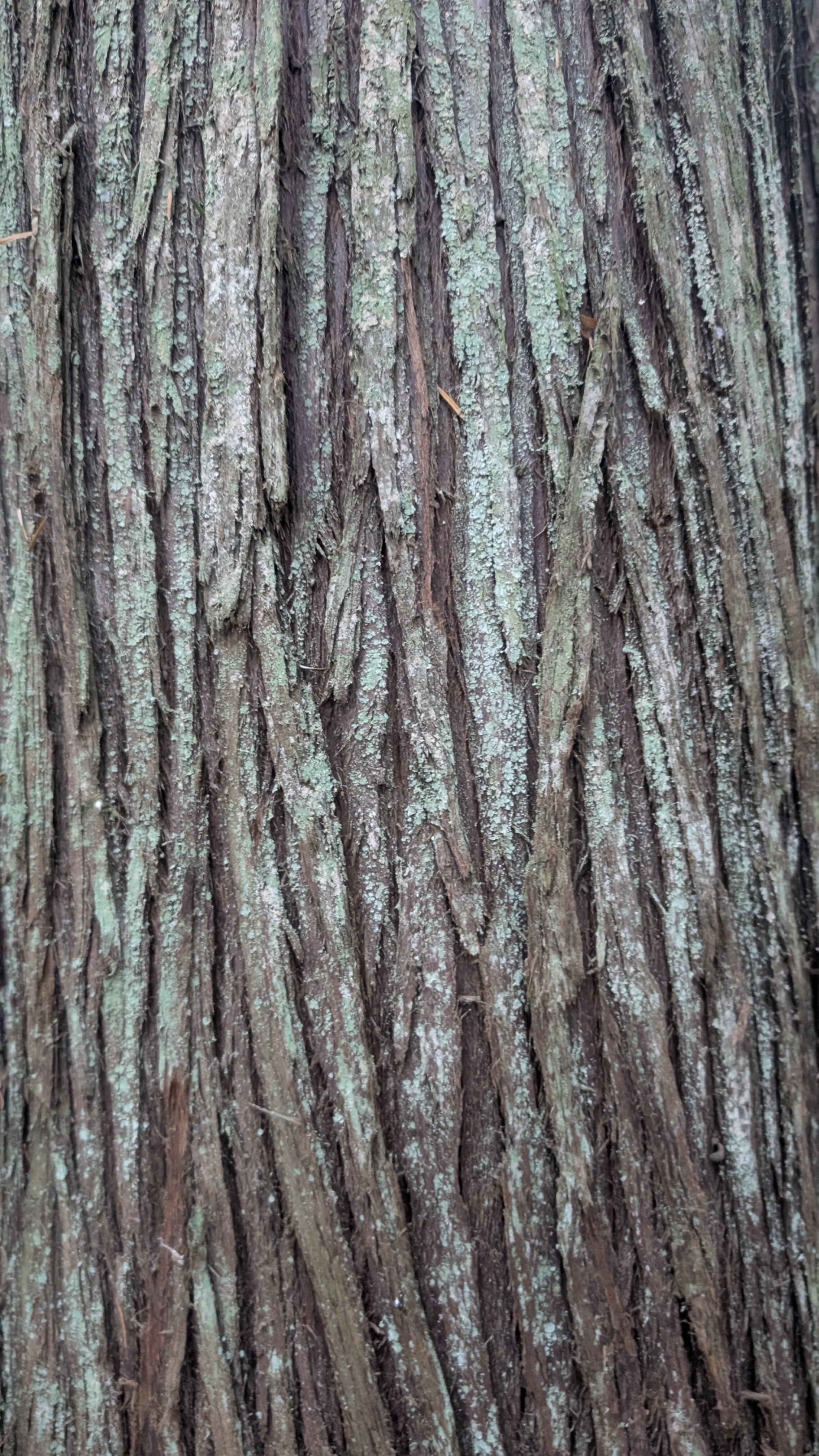
Fibrous Armor
Thuja plicata (Western Redcedar)
Unlike the chunky, blocky cork of the Douglas-fir, the ancient Western Redcedar wears fibrous, stringy bark that sheds in long vertical ribbons. Revered by Coast Salish peoples as the generous “Tree of Life” (x̌əpay̕ac), its natural aromatic oils resist decay while the fissured ridges cradle pale crustose lichens.
🍄 Fungi Varieties & Forest Alchemy
The subterranean intelligence, bracket polypores, and autumn fruiting bodies
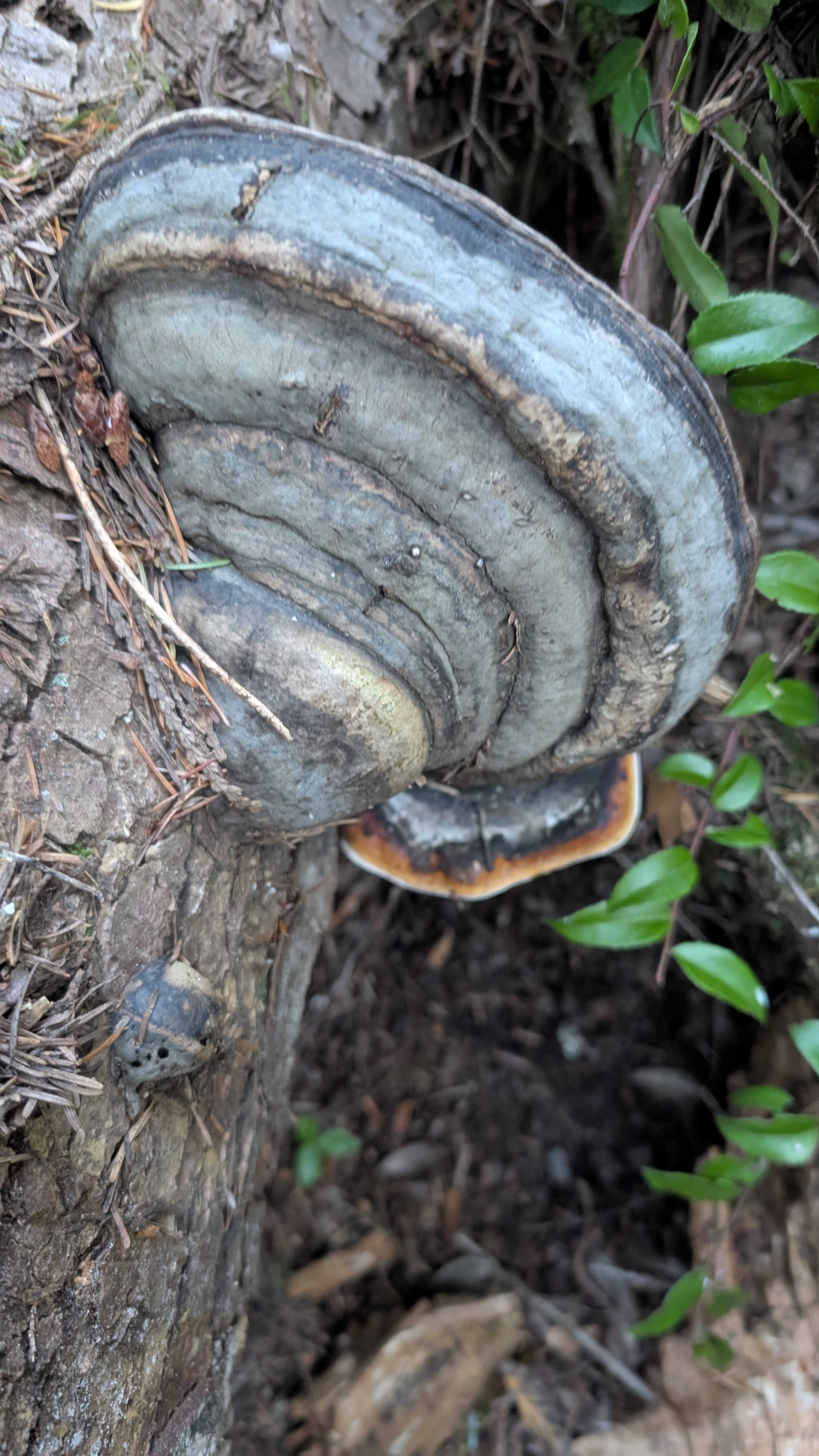
Red-Belted Conk
Scientific Name: Fomitopsis mounceae (Pinicola Complex)
Adorning decaying hemlocks and Douglas-firs, this sturdy woody bracket displays a rich color spectrum: a charcoal-black interior cap, a glowing red-amber band, and a fresh ivory margin where new pore tubes form.
- The Match Test: The resin on the cap crust melts and bubbles when exposed to a small flame, releasing a sweet balsamic fragrance—a classic field test used by mycologists!
- Annual Pore Rings: Unlike soft seasonal mushrooms, Fomitopsis adds a new pore layer every year. Counting its layers gives a snapshot of its multi-year lifespan.
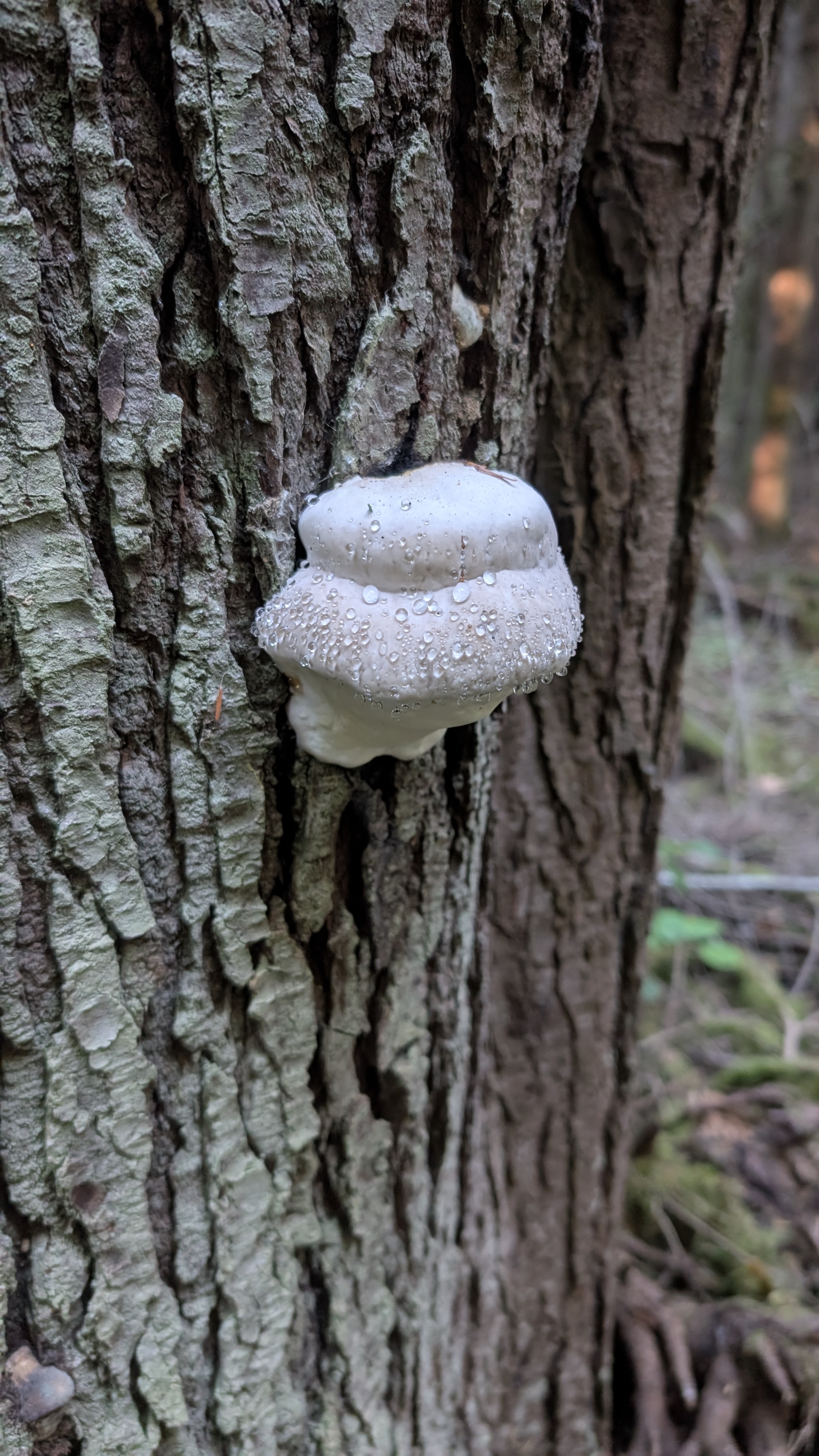
The Weeping Conk: Guttation
Phenomenon: Active Fungal Guttation (Postia / Tyromyces species)
Beading along the velvety edge of this white bracket fungus are golden and crystalline droplets. Known as guttation, this looks like enchanted morning dew, but is actually a vital physiological process originating from deep inside the mushroom.
- Internal Pressure: During rapid growth, water uptake generates enormous hydrostatic pressure within the mycelial cords, forcing pure metabolic water out through microscopic pores.
- Chemical Defense: These golden "tears" are packed with bioactive enzymes, metabolites, and secondary compounds that prevent bacteria and competing molds from colonizing the developing spore surface.
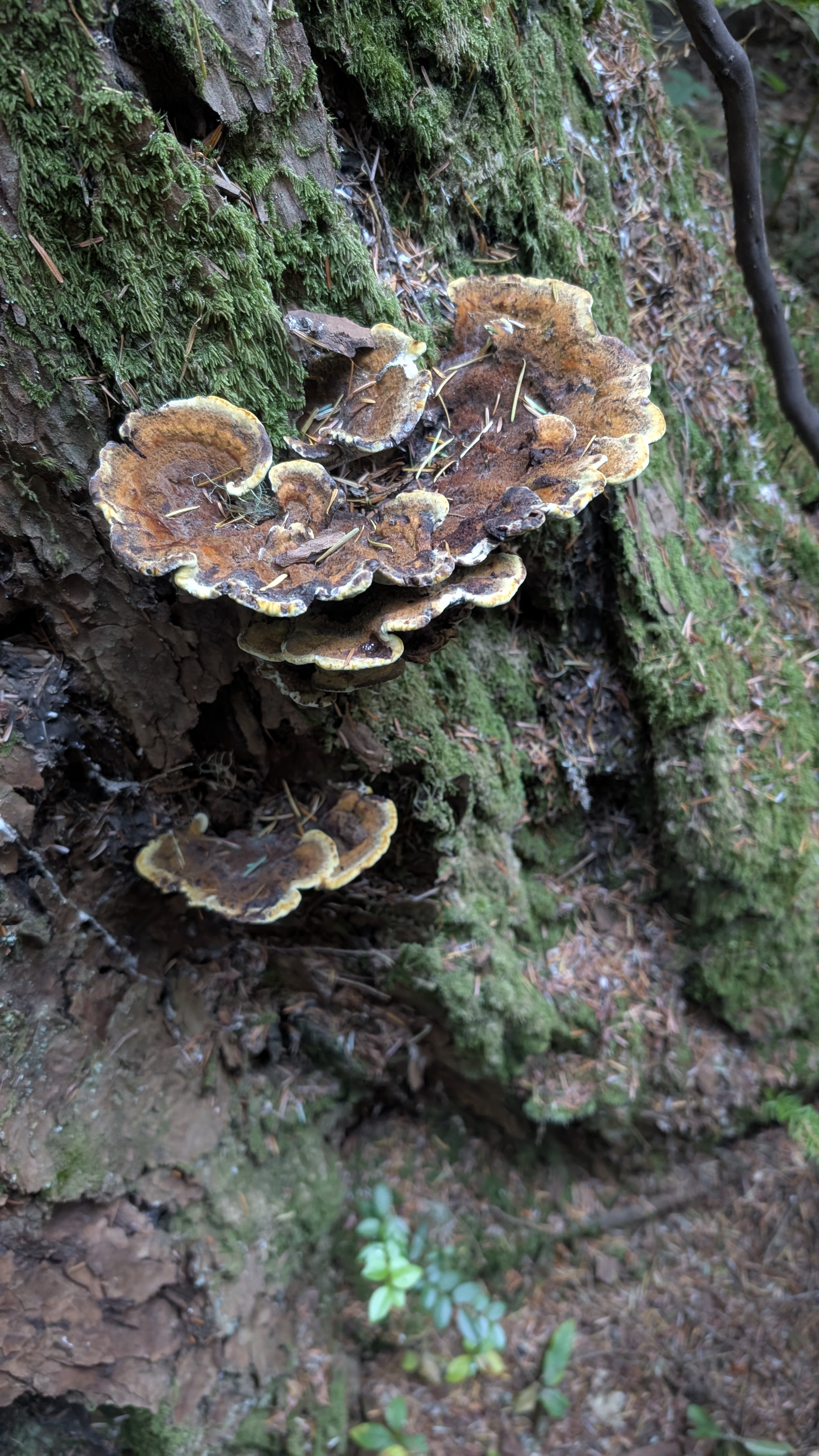
Dyer’s Polypore / Velvet-Top
Scientific Name: Phaeolus schweinitzii
Found fruiting near the base of conifer roots, this magnificent rosette polypore features a plush, velvety textured cap with circular zones of cinnamon-brown and a vivid sulfur-yellow growing margin.
- The Fiber Artist's Favorite: Prized across the world for natural textile dyeing! Depending on the mordant (alum, iron, brass) used with wool or silk, Phaeolus yields vibrant golden yellows, brilliant olive greens, and deep chocolate browns.
- Ecological Gap-Maker: By decomposing heartwood at the root base of mature trees, it eventually creates natural forest clearings, allowing sunbeams to strike the forest floor and awaken sleeping seeds.
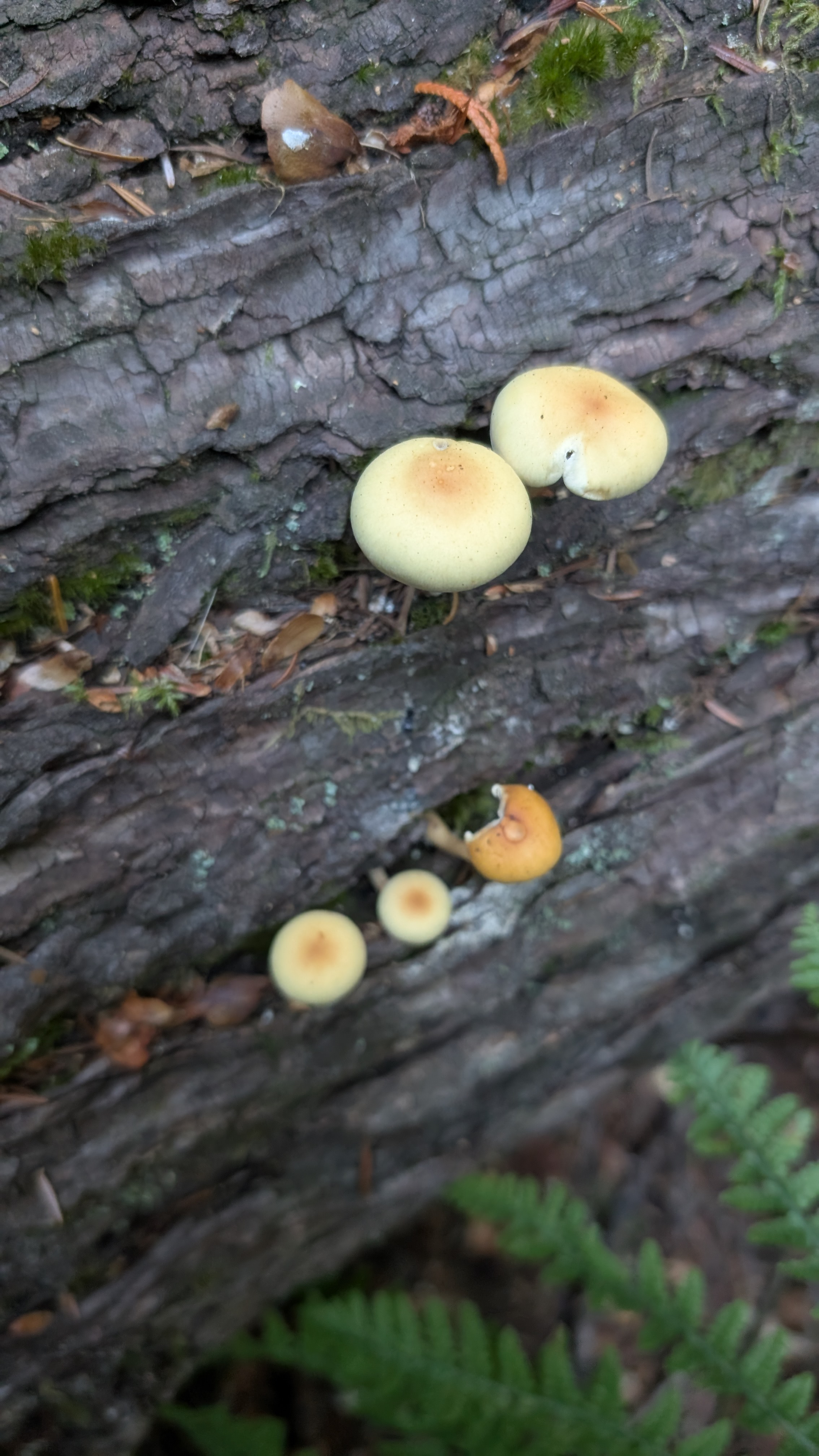
Sulfur Tuft
Scientific Name: Hypholoma fasciculare
Exploding in dense bouquets from decaying logs, Sulfur Tufts glow with bright lemon-yellow caps with reddish-orange centers and greenish-yellow gills that transition to deep purple-brown as their spores mature.
- Threaded Fringe: The genus name Hypholoma comes from the Greek words hypha (thread) and loma (fringe), describing the wispy veil fragments that cling to the cap rim.
- Intensely Bitter Defense: Containing natural toxins called fasciculols, these mushrooms are intensely bitter—an evolutionary defense that prevents slugs and deer from eating them before spores are dispersed!
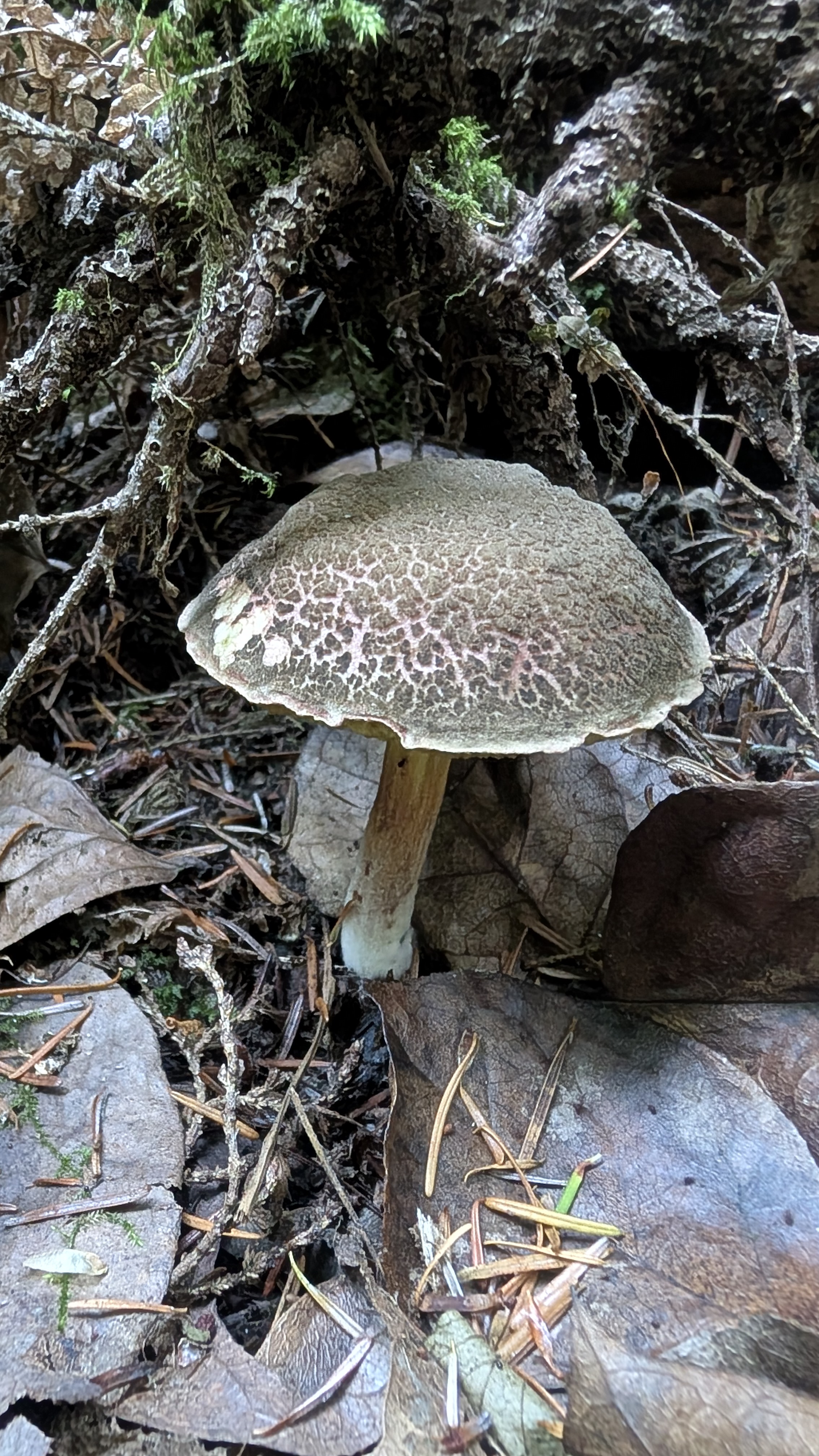
Red-Cracking Bolete
Scientific Name: Xerocomellus chrysenteron / Xerocomellus zelleri
Spotted in the damp needle duff, this bolete features a velvety olive-brown cap that splits into a handsome mosaic pattern as it dries, revealing vivid ruby-red flesh beneath. Underneath the cap, sponge-like yellow pores replace standard gills.
- Wood Wide Web Partner: Boletes form mycorrhizal associations directly with Douglas-fir root tips, trading deep soil minerals for sugars made by tree needles in the sunlight.
- Rapid Oxidation: If the yellow pores are lightly bruised, they can flash an indigo-blue reaction as oxygen meets specialized organic acids in the fungal tissue.
🌊 Dalco Passage Overlook & The Harbor Seals
Where the shear drop of coastal cliffs reveals the wildlife of Puget Sound
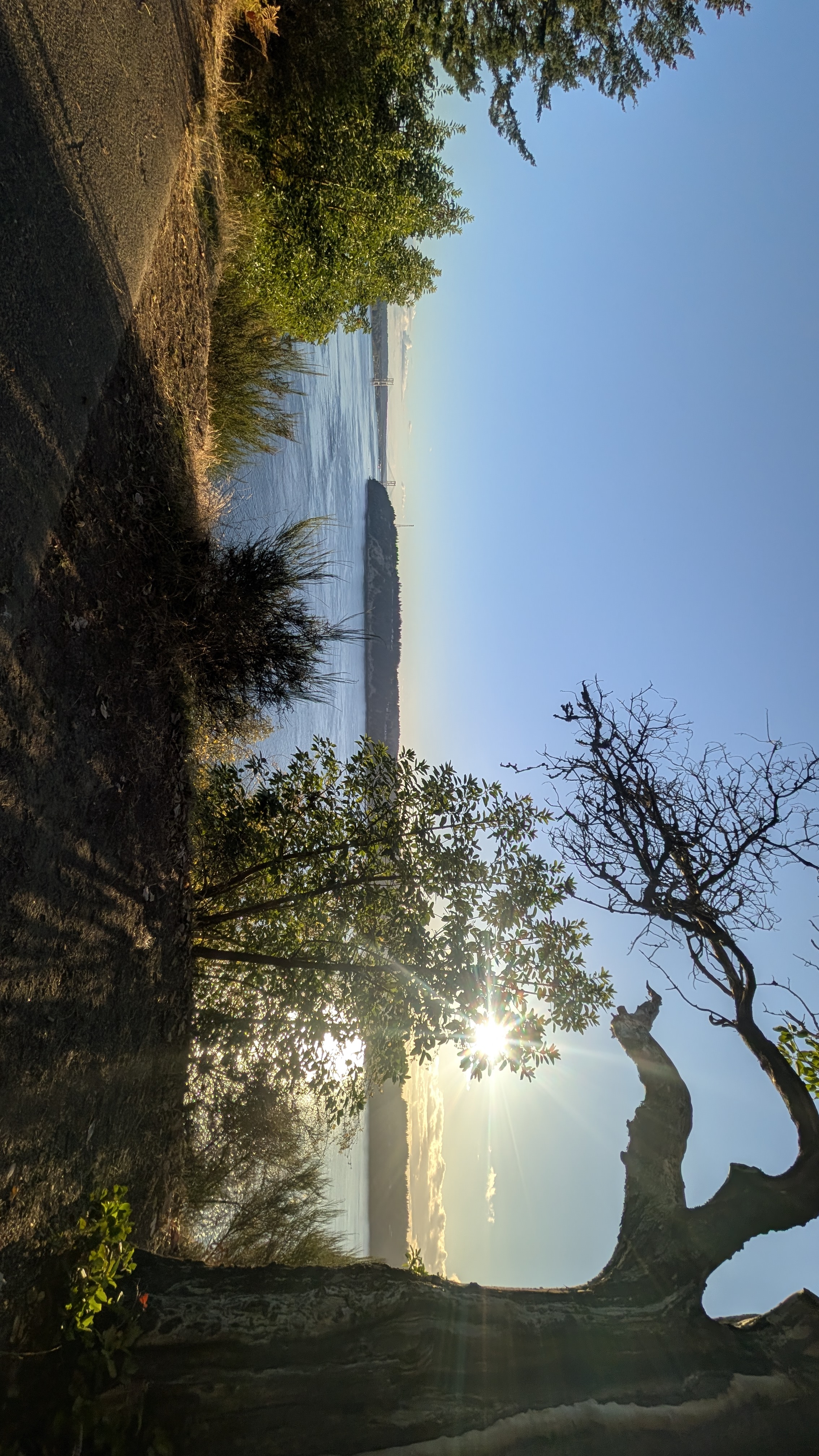
The Marine Sanctuary
Stepping out from beneath the canopy onto the high cliff rim, the salty sea breeze hits your face. Far below, the meeting of Dalco Passage and the Tacoma Narrows produces dynamic tidal eddies. Overhead, a bald eagle (Haliaeetus leucocephalus) rides the thermals, while the deep, resonant croak of a common raven (Corvus corax) reverberates through the boughs.
✦ Coastal Wildlife Notes:
What do you call a gathering of seals? When resting together on rocky shorelines or beaches, a group of harbor seals is affectionately called a bob, a colony, or a rookery; while swimming together in water, they are often called a pod or a raft!
Pacific Harbor Seals in Dalco Passage
Scientific Name: Phoca vitulina (Pacific Harbor Seal)
Peer closely into the water far below the bluff: as the camera zooms in, you can observe the sleek heads and playful motion of Pacific harbor seals navigating the gentle surface swells.
✦ Cool Facts About Pacific Harbor Seals (Phoca vitulina):
- Super-Sensory Vibrissae: Harbor seal whiskers (vibrissae) have an undulating, sinusoidal structure that cancels water vibrations from their own swimming. This enables them to track the hydrodynamic vortex wake of a single swimming fish up to 30 seconds after it swam by, even in pitch-black waters!
- The 1,500-Foot Dive Reflex: Harbor seals can dive deeper than 1,500 feet and hold their breath for nearly 30 minutes. To accomplish this, they experience dramatic bradycardia—slowing their heartbeat from ~100 bpm down to just 10 beats per minute!
- True Phocid Movement: Unlike sea lions, harbor seals have no external ear flaps and cannot rotate their hind flippers forward to walk. In the water, they are graceful acrobats; on land, they move with a characteristic belly ripple known as galumphing.
Rooting Down Under the New Moon
The New Moon is nature’s moment of collective exhale. In celestial rhythms, it marks the darkened sky before the next crescent of growth—the sacred stillness where intentions are planted deep into the soil.
Standing beside 500-year-old Douglas-firs at Point Defiance reminds me that true strength doesn't come from constant rushing; it comes from deep roots, seasonal patience, and honoring the quiet cycles of renewal. When I quiet the noise of everyday life and align my personal energy with the ancient pulse of the land, sea, and the sky, I reconnect with my clearest, most centered self.
Begin Your Alignment Journey
Ready to align your personal energy with the cycles of the sun, moon, and living realm? Connect with Sam for one-on-one meditation, flow sessions, and alignment activities.
Schedule an Alignment